Buying Lumber at the Hardware Store
Assignment Task:
Hands-on Assignment 1: Draft a ‘culture map’ that explores an aspect of behaviour considered ‘normal’ within a cultural group to which you belong. The report should detail the ‘cultural rules’, reflect on underlying cultural values, and use of a model from Module 1 to discuss your thinking.
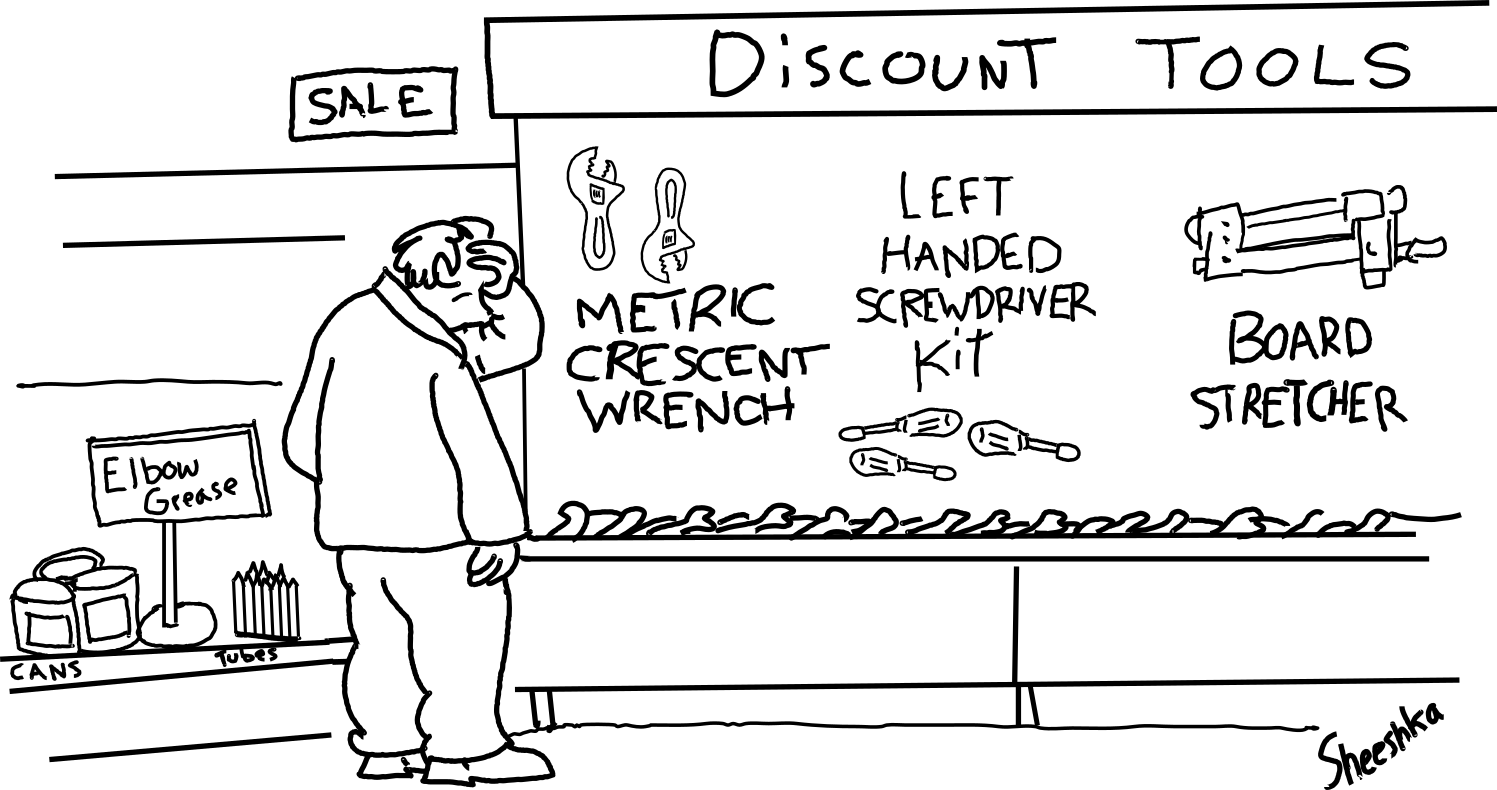
Context: Buying Lumber at the Hardware Store
For this assignment, I chose to map out how to purchase lumber from the hardware store. The context for this would typically be in person at a large box-store like Home Depot, Home Hardware, or Rona type store, and may involve interactions with a range of people including cashiers, contractors, tradespeople, salespeople, or other customers.
Much like other subcultures, folks who frequent construction supply stores often have recognizable clothing, terminology, and behaviours that, to an outsider, may appear obscure or confusing, but to an insider represent an ideal way of navigating a hardware store. The interactions I aim to map intend to illuminate the patterns of language use, shared assumptions, and cultural interactions that often structure the typical purchase of construction supplies from a retail store.
Instruction Manual
Here is a step by step breakdown of how to purchase and pick out lumber from the hardware store.
Step 1: Determine Your Plan
Decide what you’re working on and the type of lumber needed. Make a rough list of how many pieces you might need. Take note of the dimensions (Length x Width x Height) of the material needed using imperial measurements (inches and feet). Be prepared to describe the materials in technical and/or layman terms (to the best of your ability).
In this example, let’s say we’re repairing rotten floor boards and posts on an exterior deck.
Step 2: To the Store
Head to the hardware store. If you know what you are after, speak to a cashier to get started. If you are unsure of what materials you need or need to ask questions, speak to someone at customer service or the contractors desk.
Step 3: The Transaction
After ordering lumber, head to the back lumberyard or warehouse with your order. You will generally be expected to select, transport and load your own individual wood yourself.
Navigating Variations:
While the steps above outline an ideal transaction, being prepared with measurements and photos for your project can help you communicate your project if assistance is needed, or to reconsider materials if something you need is out of stock.
What if I say something wrong?
It’s ok! Hardware store cashiers are fairly understanding themselves and are often still learning the correct terminology for wood products too. While there might be some initial fear of judgment in ordering lumber, the culture of learning present within this subculture values the attempt.
3. Analysis using the Onion Model

In considering Hofstede’s “Onion Model,” we can analyze the process of buying lumber as a broader multi-layered system. The outer layer consists of data: symbols and language. Measurements, shorthand, slang, and other hardware-store idioms often serve as distinguishing characteristics that showcase one’s knowledge and competence with something. As it relates to construction culture, the communication of data and symbols follows certain standards; the way one speaks about materials can shift the power dynamic of a conversation, or influence how someone else speaks. Some examples that demonstrate the data layer would be knowing to speak about measurements in inches and feet or knowing common stock sizes (8ft, 10ft, 12ft, 14ft, 16ft etc. always using imperial). These serve as cultural characteristics that function more like symbolic rules than simple vocabulary recall.
As related to purchasing lumber, the next layer of this diagram serves to recognize hardware store exemplars and seasoned contractors: the “Heroes”. In my example, these would be the folks who have learned and are fluent with hardware store terminology such that that know where things are, what types of construction supplies can be ordered and how, and someone who makes correct decisions with efficiency and decisiveness acting as role models for the culture.
Together, the inner and outer layers of Hofstede’s “Onion Model” include the element of practices that creates an interconnectedness between these sections. Applying this logic to the context of purchasing lumber, there is a clear ritualistic “way of doing” things that is kept alive by culture bearers through the use of cultural information and data.
At the center of the diagram is the heart of the values that drive cultural behaviors and considerations. As related to purchasing lumber, values like friendliness and clarity come to mind as being important. Because the transaction of purchasing lumber places the burden on the customer to articulate specific needs and measurements, self-reliance is another value that is highly prized within the hardware-store realm. That said, questions are always acceptable to most anyone at the hardware store, but it becomes important to realize the limitations of a cashier’s knowledge compared to that of a professional trades person. Patience, humor, and a sense of collective responsibility and learning are also other values I imagine would apply to the majority of hardware store goers.
4. Reflection
Mapping out the different cultural characteristics through a process like this, to me, really highlights how high the “barrier to entry” is in certain circumstances.
In addition, through the use of the Onion Model, reflecting on the nuances involved in each of the above steps brings to light the idea that culture is not something we have but something we do by engaging with rituals, data, and heroes of our own subcultures.
References
Module 1 Notes (ETEC 542). Topic 1.2.3: Symbols and Meanings. “Symbols are arbitrary and have no natural connection with the things they describe.”
Module 1 Notes (ETEC 542). Topic 1.1.7: Activity Orientation & Hall’s Context. Low-context communication focuses on expressing intentions explicitly.
Hofstede, G. (1991). Cultures and Organizations: Software of the Mind. Cited in Module 1 Notes, Topic 1.1.6. Individualism prioritizes individual rights and autonomy.
Module 1 Notes (ETEC 542). Topic 1.2.8: Communication Accommodation Theory. Humans change their talk to match the listener to signal identity.