ETEC511 - Project Retrospective
The Team:
Jordan Swallow, Noralee Yarra, Scott Hladun, Bosede Ojo, & Myself
The Proposal:
See the project proposal here.
The Project:
The Reflection:
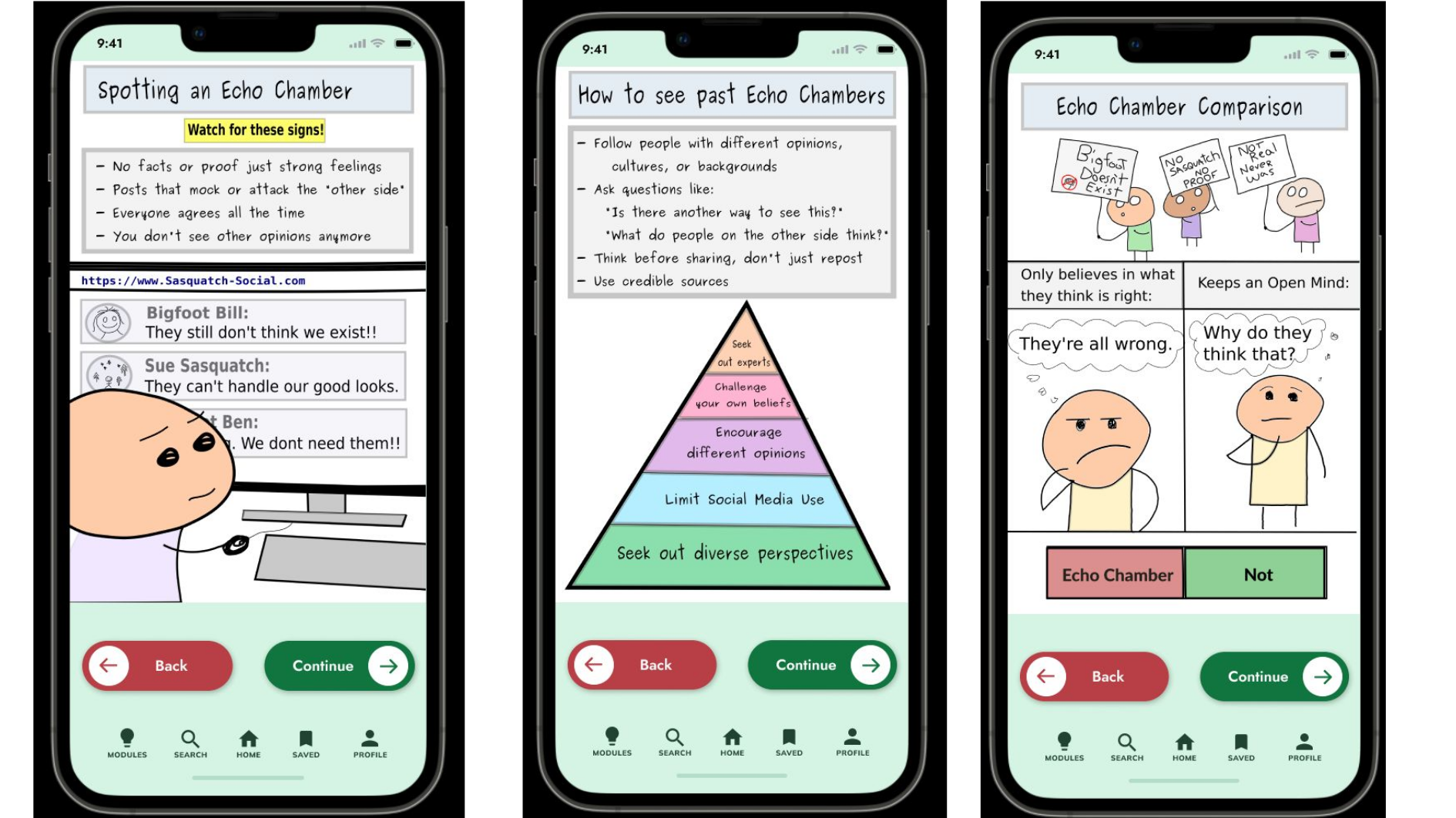
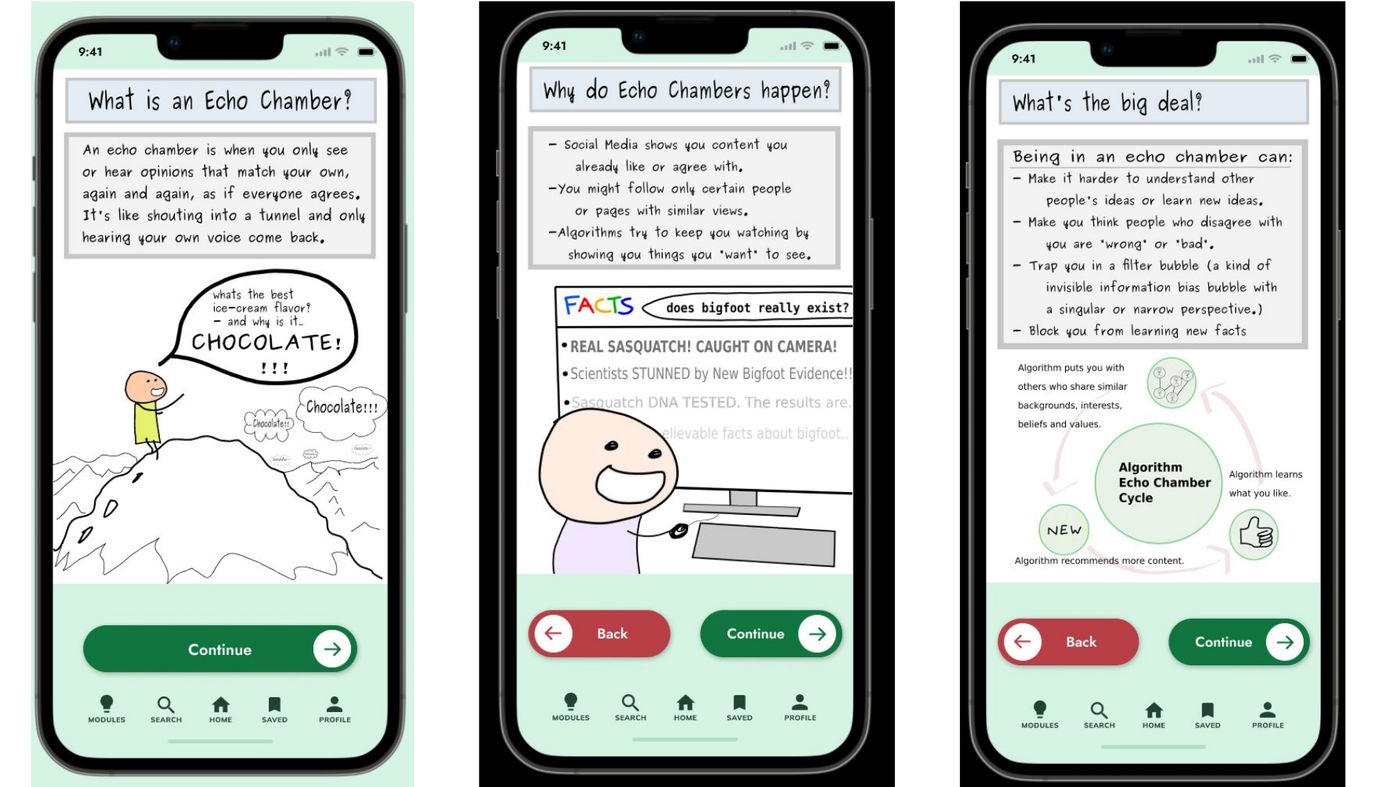
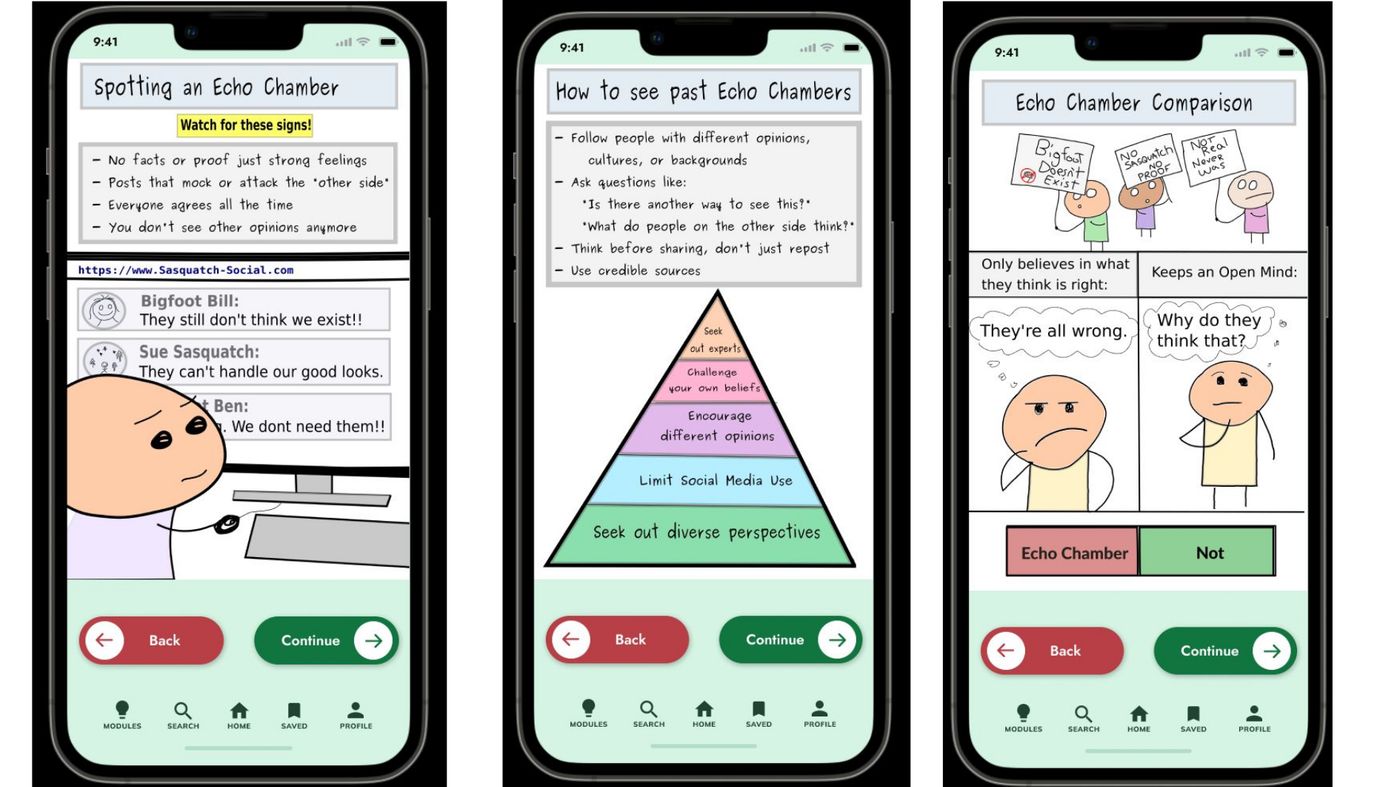
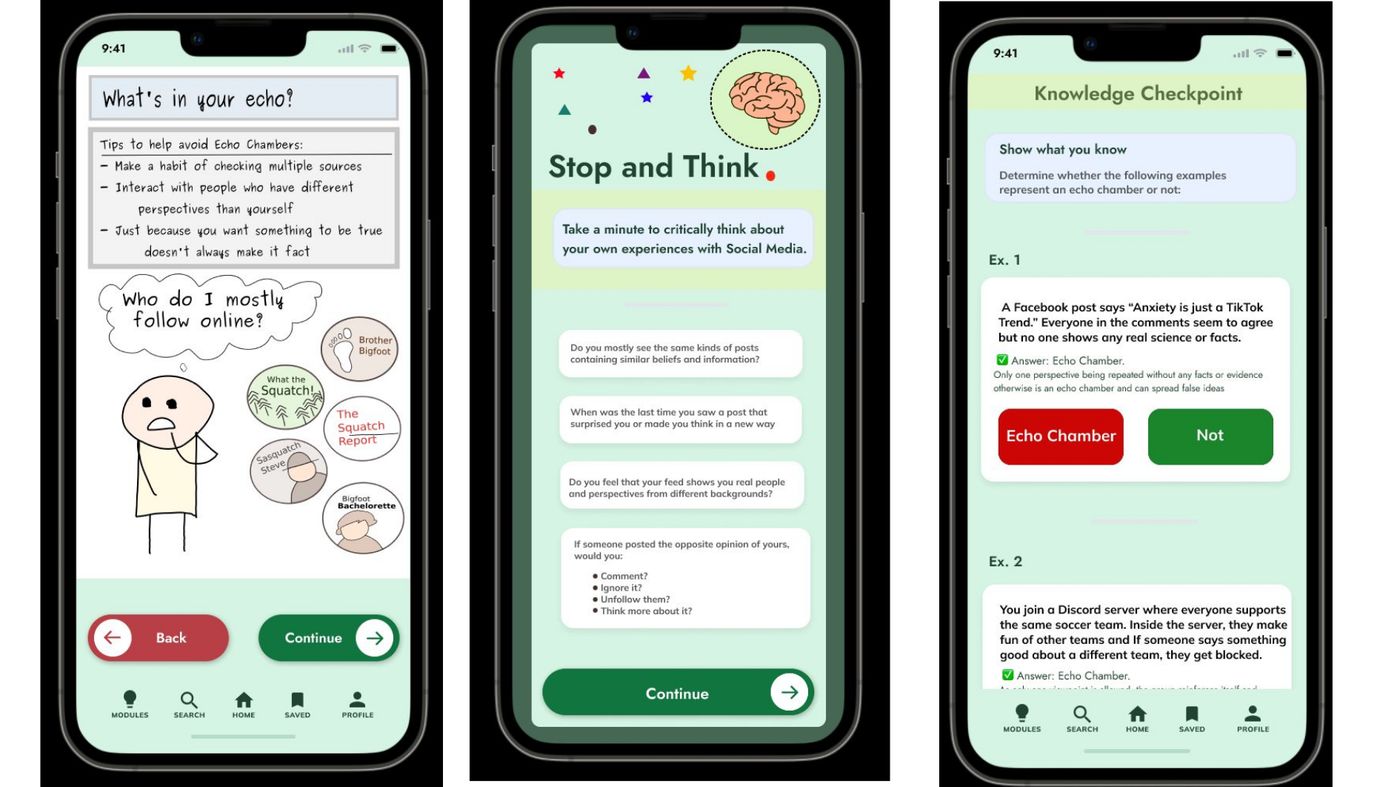
For my contribution to this group project, I created comics in Inkscape in the style of Cyanide & Happiness for my module on Echo Chambers. I designed each slide around a short "who/what/why/how” style narrative and included a playful drawing underneath. I tried to keep things light hearted, simple, and use humour to keep engagement high from one slide to the next as our intended audience was grade 6-9 students.
Something that I think worked well in this module, was the intentional sequencing and flow of the illustrations and the “chunking out” of information from one slide to the next. Our decision to use Figma to create the prototype app really helped to organize the user’s overall experience of the content by guiding their interactions, reflection, and reading pace throughout the modules in this way. One example of this is seen when the user gets to the last slide of the comic, they find a “Stop & Think” reflection type slide, followed by a check-for-knowledge type slide. The shift from the comic’s narrative to the slowed down introspective frames encourages active reflection and consolidation of learning from the user.
As I was working on this, I largely found my thoughts gravitating towards Woolgar’s words on “configuring the user” and how the design and parameters placed on the user, steer the user’s likely actions, and experiences. In creating this module, I was able to actively take this into consideration by guiding the user’s experience beyond the “who and what” of the topic and into the “how and why” (the “detection and reflection of media”). Additionally, the intuitive navigation, the visual rhythm of the illustrations and content, and the use of humour are other design characteristics that cater to usability principles as set out in Woolgar that encourage certain behaviours and ways of interacting with the content from the user.
In designing my part and conceptualizing how to integrate usefulness and usability into a tool, this project helped me to understand and demonstrate how the role of the designer, their design choices, the technology itself, and the user, all come together to create the elements of usability.
If I were to spend more time on my section in the future, perhaps I would work towards greater accessibility efforts (maybe through the read-aloud text, or greater contrast/readability of certain parts), as to try and really hone in on increasing user engagement with the material across all reading levels and personal experiences with media.
Overall, I found that working through this project helped me reinforce the concept that usability in technology is never neutral. By creating my own module for this project, it became quite clear to me that since every design choice ultimately ends up shaping the user’s behaviour, attention, and actions, usability is both a technological and pedagogical responsibility for designers of educational tools and technologies.
My Contribution:
Individual Pages:
Frames 1-3 , Pg 4-6 , Pg 6-9