Community Exclusion and the Ethics of Participation in Prince Rupert
Dedicated to the colleagues and community members who helped shape this experience
Community spaces are meant to be inclusive by design. They are supposed to be places where participation emerges naturally, where people come together through shared interest, and where the non-neutrality of social and organizational structures is acknowledged and addressed. This is why my experience in the Prince Rupert arts community has remained difficult to ignore. It highlights how participation can be quietly shaped, limited, or redirected by those who hold influence, and how easily exclusion can become normalized when left unchallenged.
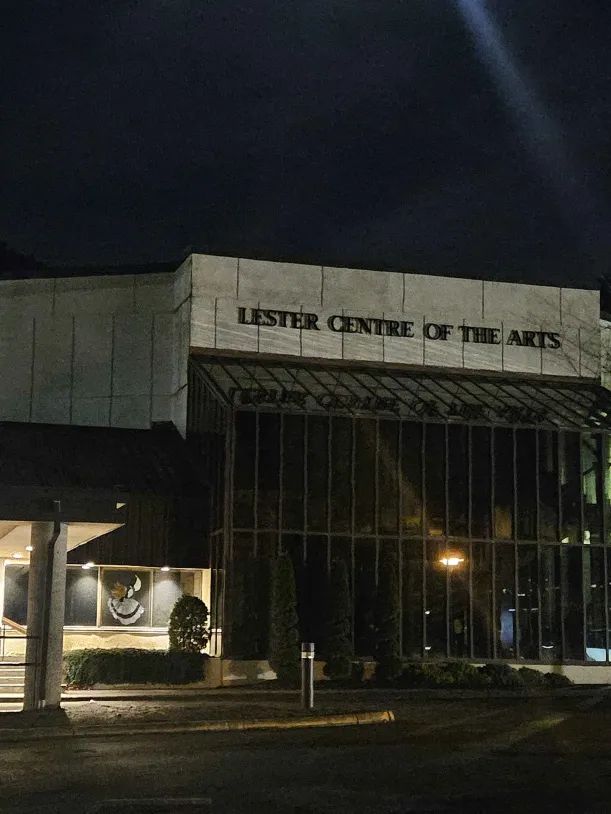
An example of this came when the manager of the Lester Centre informed me that a local middle school music teacher, who had volunteered as part of the production team for a community-wide musical, had explicitly requested that I be excluded from participating. I was in disbelief. Here was someone using their volunteer role and social position within the arts community to leverage who could be involved in a community event, and on what terms. It was difficult not to see this as an exercise of power rather than an act rooted in community or leadership.
Unfortunately, this situation has not been isolated. It has repeated over the years and reflects a broader pattern within the local arts scene here in Prince Rupert. I want to call this out for what it really is: a form of community bullying. It shows how community spaces that are assumed to be open and welcoming can become shaped by behind-the-scences determinations of who belongs, who is heard, and who is quietly pushed out.
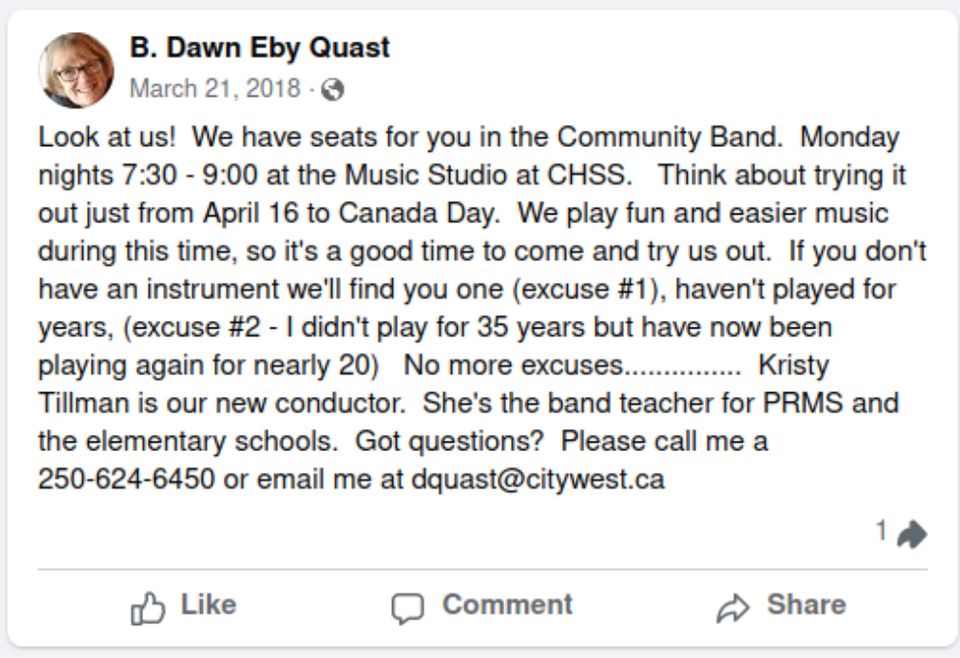
Another example of this stands out to me, where the same middle school music teacher volunteered to conduct the Prince Rupert Community Band. The group was advertised publicly as open to everyone and yet upon my attendance, they withdrew from the role, and soon after the entire community band was suspended indefinitely. This decision did not only impact me. It affected every participant who simply wanted to engage in music making.
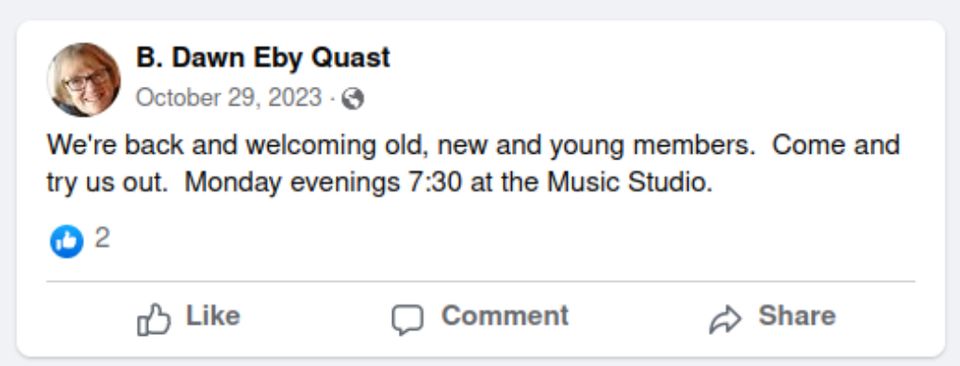
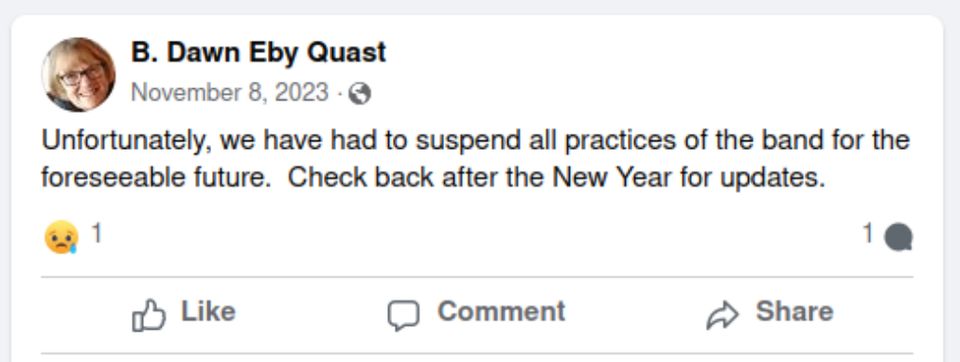
I later discovered that my name had been silently removed from the group’s mailing list by its secretary, effectively excluding me again without any conversation or accountability. The irony is difficult to ignore here, as I had previously conducted this ensemble and contributed to it for years as a trombone player alongside this colleague.
These experiences have led me to want to share this exclusion publicly to acknowledge it for what it is. Community exclusion in community music is not just a personal issue; it undermines the ethical foundation of what community arts are supposed to be. Sadly, when community members tolerate or overlook this kind of behavior, they contribute to a culture where participation becomes conditional, where power goes unchecked, and where exclusion becomes routine rather than questioned.
To create genuine community, we must recognize that participation is shaped by the systems and people who structure these spaces. We must ask whose voices and presence are valued, whose are dismissed, and why. I believe that there is simply no place for exclusionary practices in any community arts environment. The moment we allow them, we compromise the very idea of community itself.
While this post is drawn from personal experience, its ideas connect with broader conversations about the participatory cultures educators establish and contribute to, and the non-neutrality of learning environments which are often ignored beyond the classroom.